
Opioids and the Brain: Why Willpower Alone Was Never Going to Be Enough
“If he really wanted to stop, he would.” It’s one of the most common things families say about a loved one struggling with opioids, and one of the most mistaken. Because opioid addiction is not a test of willpower. It is a physical rewiring of the brain. Understanding that is the first real step toward […]
Always On, Never Present: The Real Cost of Internet Addiction
In an era of hyper-connectivity, a quiet crisis is taking over modern homes. Professionals and urban youth under 35 find themselves locked in a state of being “Always On, Never Present.” What starts as casual scrolling, late-night gaming, compulsive stock trading, or endless social media consumption quickly becomes a serious behavioral disorder. At Sanctum Private […]
Why Coming Off Benzodiazepines Is So Dangerous to Do Alone
Benzodiazepine dependence rarely looks like addiction. There’s no dealer and no high, just a doctor’s prescription, a strip in the handbag, and a calm that slowly becomes impossible to live without. That is what makes it quiet. When people finally decide to stop, they often try to do it the same way they started: privately […]
“It’s Just Weed”: Rethinking What Cannabis Dependence Actually Looks Like
Few phrases delay treatment in Pakistan as effectively as “it’s just weed.” Because cannabis, commonly known as charas or hashish, is culturally dismissed as a harmless “soft drug,” families often wait years before seeking help. By the time they do, the disorder is deeply entrenched, and the damage is far more than anyone expected. Effective […]
When the Game Stops Being a Game: Understanding Gaming Addiction
For most people, gaming is harmless fun. But for some, particularly urban youth and young professionals under 35, it crosses into something clinical. In the Lifeline model, compulsive online gaming is recognised as a genuine behavioural addiction that recruits the same brain pathways as drugs. That’s why serious gaming addiction treatment in Pakistan treats it […]
No Substance, Real Addiction: How Gambling Hijacks the Same Brain Circuits as Drugs
There’s a common assumption that addiction requires a substance, a drug, a drink, a pill. But some of the most destructive dependencies involve no chemical at all. Compulsive gambling, gaming, and high-risk crypto trading are recognised in the Lifeline model as true addictions, because they hijack the same brain circuitry as drugs. Understanding this is […]
When Medication Becomes Dependence
In many families across Pakistan, the most dangerous kind of addiction is the one that looks like legitimate treatment. When medication is prescribed by a doctor, patients and relatives often assume it cannot be a substance use disorder. The reality is more complex: prescribed medication can cross the line from medical support into clinical dependence, […]
Social Drinking to Dependence: The Line You Can Not See Until You’ve Crossed It
Almost no one decides to become dependent on alcohol. The path from “just social drinking” to alcohol use disorder is a slow, silent crossing of a line most people never see until the consequences make it impossible to ignore. Because drinking is often normalised in certain social and professional circles, this boundary stays invisible to […]
Addiction & Izzat: Why Families Stay Silent
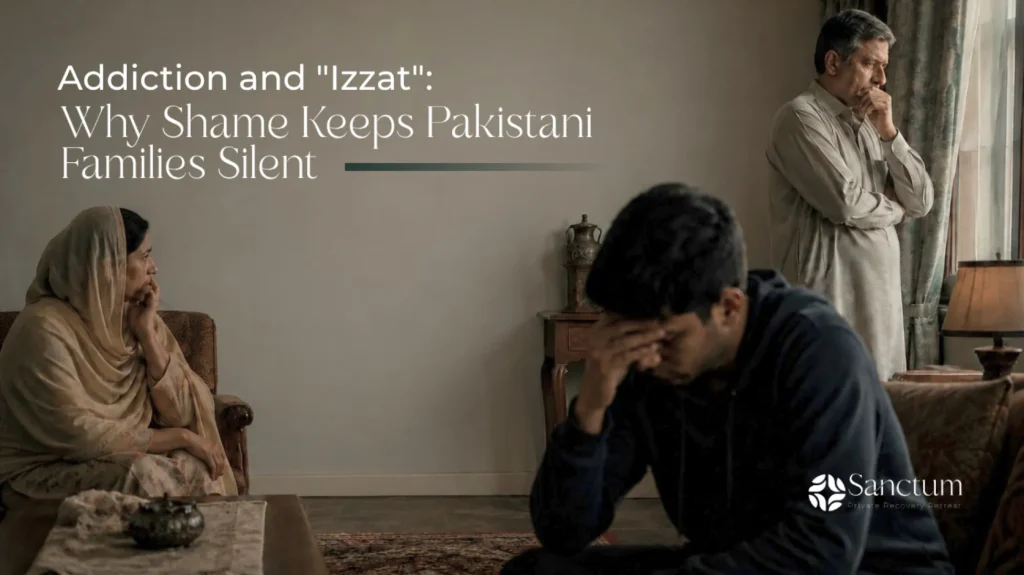
In Pakistani culture, izzat (family honour) is one of the most powerful forces shaping how we live. It organises family life, guides our choices, and defines our standing within the biradari. In most ways, it is a source of strength and belonging. But when addiction enters a home, izzat can quietly become a double-edged sword. […]
The First 72 Hours of Rehab: What to Expect
Written with clinical guidance from Fazal Wahid, Addiction Specialist and founder of the Lifeline Signature Addiction Treatment Model · 27-07-2026 The decision to enter treatment is one of the hardest a person or family can make. Once it’s made, the fear of the unknown often takes over: What actually happens on day one? Will it […]