How to Choose the Right Rehab in Pakistan: A Family's Complete Guide
When a family first confronts a loved one’s addiction, the fear can feel paralysing. Where do you turn? Who can you trust? And how do you make such an important decision without making things worse? If you’re searching for the right private addiction rehab in Pakistan, this guide will help you choose with clarity and confidence.
Below are the factors that matter most, and the questions every family should ask before committing to any facility.
1. Look for Genuine Clinical Depth, Not Just Detox
The single biggest mistake families make is assuming that detox equals recovery. It doesn’t. Detox manages the physical symptoms of withdrawal, but it does nothing to address the psychological, emotional, and social roots of addiction. This is precisely why so many people relapse after short-term programmes.
A serious addiction rehabilitation center should offer a structured, long-term clinical pathway, one that moves through medical stabilisation, deep psychological work, relapse prevention, and reintegration. At Sanctum, our Lifeline Signature Model is a five-phase residential journey built specifically for South Asian families, treating addiction and its deeper causes rather than just its symptoms.
Questions to Ask Yourself: What happens after detox? Is there a structured, evidence-based programme, or does treatment effectively end once withdrawal is over?
2. Check the Credentials of Those Providing Care
Addiction is a medical condition, and it deserves medical expertise. Yet many facilities are run on personality and instinct rather than qualified clinical leadership.
Look for a team led by senior professionals, consultant psychiatrists, qualified psychologists, and medical doctors, supported by trained recovery staff. Ask who designed the treatment model, what their qualifications are, and whether you can speak with them directly. A credible luxury addiction treatment centre will welcome these questions, not deflect them.
Questions to Ask Yourself: Who leads the clinical team, and what are their qualifications? Can we speak with the treating doctor before admission?
3. Prioritise Confidentiality and Privacy
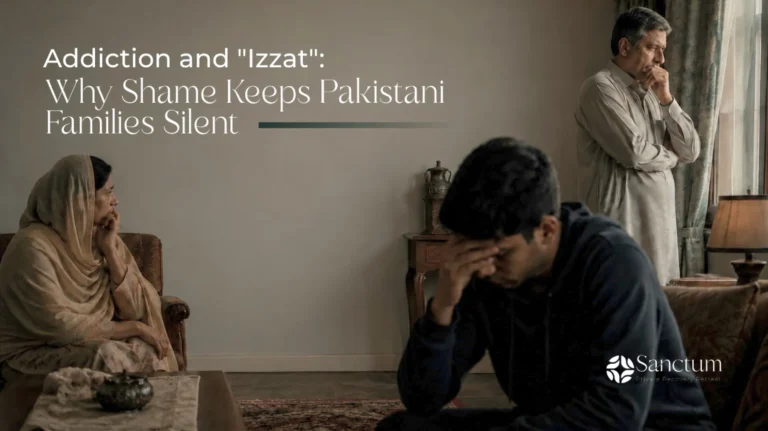
For many Pakistani families, the fear of stigma and damage to izzat is as heavy as the addiction itself. This fear keeps people silent for years, and it’s completely understandable.
The right facility treats confidentiality as sacred. A genuine confidential healing and recovery environment protects patient identity at every level, from the first enquiry to discharge and beyond. If you’re wondering whether there’s a confidential rehab where privacy is truly guaranteed, ask exactly how a facility safeguards it, in writing, if needed.
Questions to Ask Yourself: What are your confidentiality protocols? Who has access to information about my loved one, and how is their privacy protected?
4. Consider the Environment and Staffing
Recovery happens faster and more fully in a calm, safe, and dignified setting. Overcrowded facilities with high patient numbers cannot offer the individual attention that lasting change requires.
Smaller, exclusive settings allow for genuinely personalised care. Look at the resident capacity and the staff-to-patient ratio; these numbers tell you how much individual attention your loved one will actually receive. A private recovery retreat with limited occupancy and intensive staffing offers a level of care that larger institutions simply cannot match. At Sanctum, a maximum of 17 residents and a 2:1 staff-to-patient ratio ensures care remains deeply personal.
Questions to Ask Yourself: How many patients do you treat at once, and what is your staff-to-patient ratio?
5. Ask About Family Involvement
Addiction affects the whole family, and recovery works best when families heal together. A strong programme educates and involves loved ones, rebuilding trust, teaching healthy boundaries, and preparing everyone for life after discharge.
If you’ve been searching for addiction help for a family member, look for a facility that treats you as a partner in recovery, not a bystander.
Questions to Ask Yourself: How are families involved in treatment? Will we receive guidance and support too?
6. Understand the Aftercare Plan
Discharge is not the finish line; it’s the beginning of the most vulnerable period. The months following treatment carry the highest relapse risk, which is why structured aftercare is essential.
Ask what support continues after residential care ends: outpatient therapy, family check-ins, monitoring, and long-term guidance. Recovery is a lifelong journey, and the best facilities remain committed for the long term.
Questions to Ask Yourself: What does your aftercare programme include, and how long does support continue?
Do You Need to Send Your Loved One Abroad?
For years, many affluent Pakistani families believed world-class care meant travelling to Thailand or Switzerland, at enormous financial and emotional cost, and with painful separation from family. That’s no longer the case.
A premium private addiction recovery retreat now exists within Pakistan, offering international clinical standards alongside genuine cultural and religious understanding. Choosing a luxury rehab in Pakistan means your loved one heals close to home, within your own values, and without geographic separation from the family who love them.
A Final Word
If someone you love can’t stop drinking or using, and you’re seeking help, please know this: reaching out is not a sign of failure. It’s an act of love, and it takes real courage.
The right facility will meet you with compassion, treat your loved one with dignity, and guide your whole family toward lasting recovery, in complete confidence.