For most people, gaming is harmless fun. But for some, particularly urban youth and young professionals under 35, it crosses into something clinical. In the Lifeline model, compulsive online gaming is recognised as a genuine behavioural addiction that recruits the same brain pathways as drugs. That’s why serious gaming addiction treatment in Pakistan treats it with the same clinical rigour as any substance.
Gaming And The Brain: The Same Reward Pathway As Drugs
Compulsive gaming acts as a high-intensity stimulus on the brain’s mesolimbic dopamine system, the reward pathway linking the ventral tegmental area, the nucleus accumbens, and the prefrontal cortex. This is the identical circuitry that addictive drugs hijack. When gaming overstimulates it repeatedly, the brain learns to treat the behaviour as essential, and the same loss of impulse control follows. Understanding this biology is what separates effective video game addiction treatment in Pakistan from simply “taking the console away.”
The Substitution Trap: Why Gaming And Drug Recovery Are Linked
One of the most important clinical insights is the substitution trap. When someone in early recovery stops their primary substance, their dopamine system is left “hungry” for stimulation. If the underlying condition isn’t treated holistically, the brain seeks a substitute, and gaming is a common one.
A classic clinical watch-point: patients recovering from a powerful stimulant like ICE (crystal meth) are at high risk of transferring into compulsive gaming, because the brain is desperately trying to replicate the chemical flood it lost. In the brain, these aren’t two separate problems; they’re one disease seeking a new outlet. This is why gaming disorder treatment in Pakistan must address the whole reward system.
Why Gaming Platforms Are Uniquely Risky In Recovery
Gaming environments carry three specific dangers. First, use-normalising communities, voice chats, and platforms where drug culture is openly discussed and normalised. Second, the stimulant association: marathon gaming demands focus and sleeplessness, so it’s often paired with stimulant use. Third, the secrecy factor: a person can be physically removed from drug-using friends yet remain connected to them online through Discord, WhatsApp, and gaming lobbies.
One Lifeline case illustrates this: a patient recovering from ICE nearly relapsed in week three of aftercare. His home was completely secure, but he was quietly gaming three to four hours a night with peers who were using ICE during sessions, keeping his craving circuits firing. This is exactly the hidden risk that good online gaming addiction help in Pakistan is designed to catch.
Signs Of Gaming Addiction
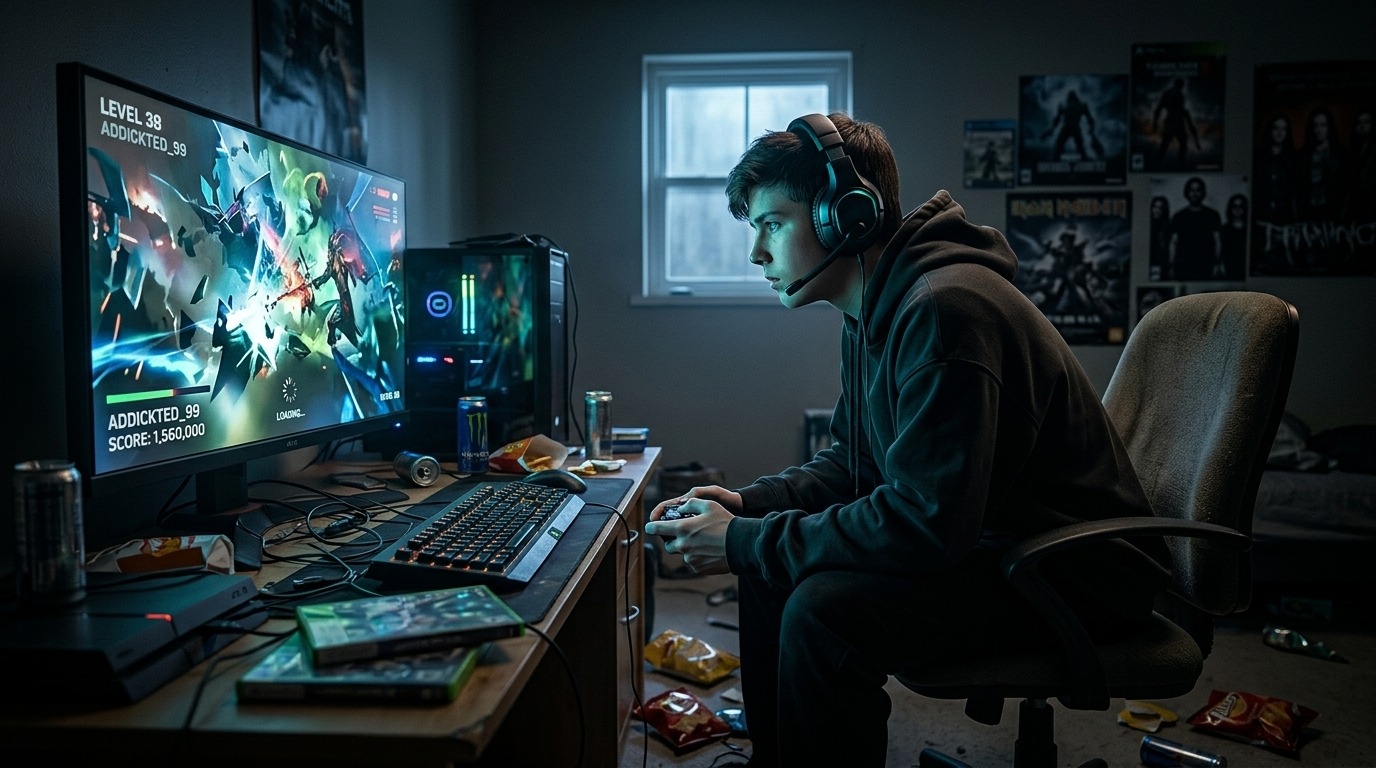
Recognising the signs of gaming addiction early matters. Watch for gaming that stretches late into the night, loss of interest in studies, work, or friendships, irritability or anger when asked to stop, declining sleep and self-care, and continuing despite clear consequences. If you’re a parent asking “is my child addicted to video games?”, the key distinction is whether gaming is a hobby or has become a compulsion that displaces real life.
How Gaming Addiction Is Treated
Because behavioural and chemical addictions are expressions of the same brain disease, the Lifeline model treats both at once. Screening begins at admission, where clinicians assess the patient’s digital environment directly, hours played, patterns that disrupt daily structure, and which online spaces trigger cravings.
For younger patients especially, structured gaming addiction treatment for young adults in Pakistan works because it rebuilds the whole picture. Before discharge, the team builds a Digital Boundary Plan with the family: a one-hour daily limit in shared common areas rather than an outright ban (which invites defiance), no consoles or phones in the bedroom (sleep is vital for brain repair), and “account purges”, leaving drug-associated groups and resetting feeds toward healthy content.
Deeper therapy addresses why gaming took hold. If it became an escape from isolation or a painful sense of self, recovery means rebuilding real-world hobbies and face-to-face sober connection. As a discreet, private gaming addiction treatment provider in Pakistan, Sanctum focuses on that whole-person rebuild.
Getting Help
Knowing how to stop gaming addiction starts with one truth: this is a recognised condition, not laziness or a lack of discipline, and it’s treatable.
Whether you need video game addiction counselling in Islamabad for yourself, gaming addiction help for a family member in Pakistan, or you’ve been searching for gaming addiction help near you in Islamabad, our gaming addiction rehab in Islamabad offers structured, confidential care. Recovery begins with one private conversation.
If gaming has taken over your life or your child’s, contact Sanctum Private Rehab for a confidential assessment.
Mr. Fazal Wahid – Founder & CEO, Sanctum Private Rehab
Architect of the Lifeline Signature Model and a pioneer of system-driven addiction recovery, Fazal Wahid brings world-class, structured care to Pakistan. A King’s College London psychology graduate with postgraduate training in Addiction Science, he has refined 15 years of clinical practice into one teachable system of recovery.
[ Learn more about Mr. Fazal Wahid ]
This article is adapted from Fazal Wahid’s book, Lifeline: The Complete Treatment Model. It draws on his clinical work and is written by the Sanctum team.