There’s a common assumption that addiction requires a substance, a drug, a drink, a pill. But some of the most destructive dependencies involve no chemical at all. Compulsive gambling, gaming, and high-risk crypto trading are recognised in the Lifeline model as true addictions, because they hijack the same brain circuitry as drugs. Understanding this is the foundation of effective gambling addiction treatment in Pakistan.
The Same Reward Pathway As Drugs
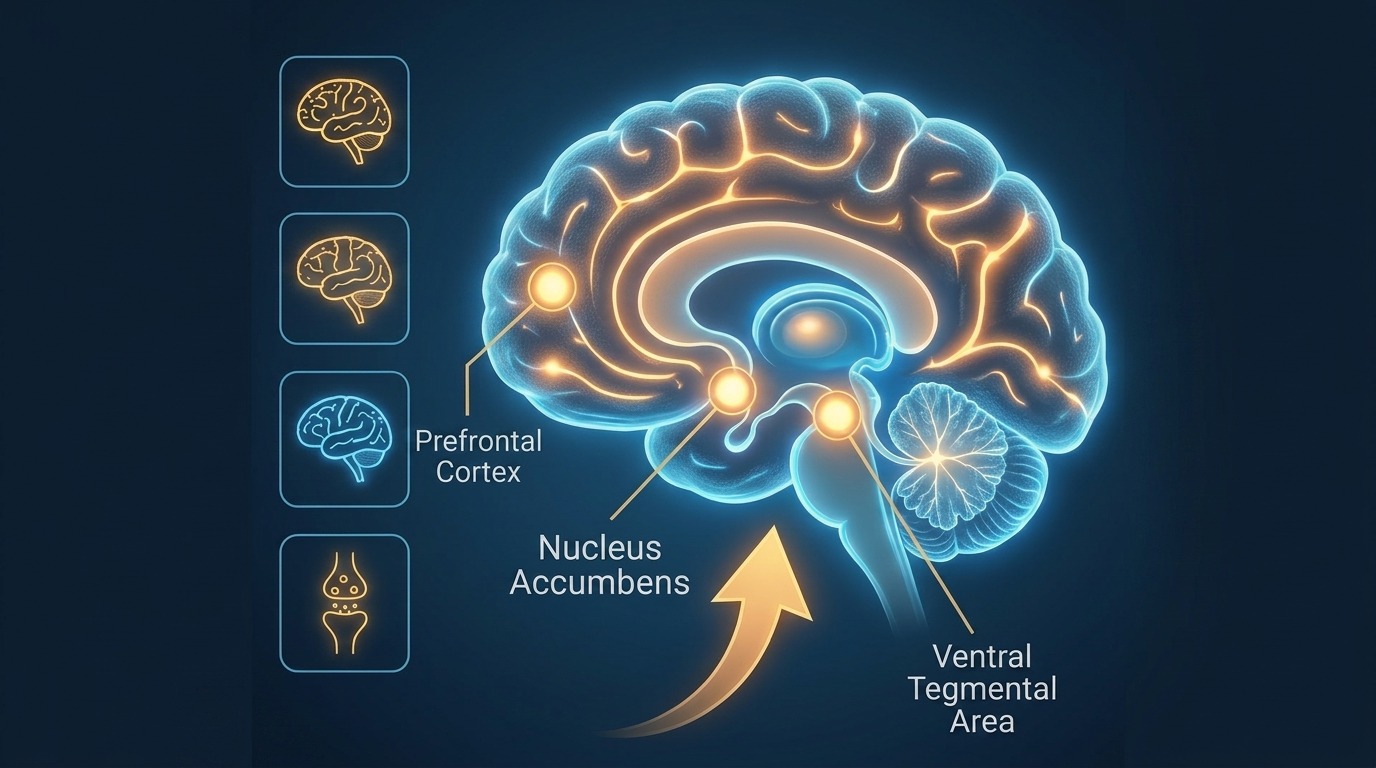
Every addiction, whether to a substance or a behaviour, recruits the brain’s mesolimbic dopamine system, the reward pathway. It connects three key regions: the ventral tegmental area, where dopamine release begins; the nucleus accumbens, the “pleasure centre” that generates euphoria and drives repetition; and the prefrontal cortex, the seat of judgment and impulse control.
This system evolved to reward survival behaviours like eating and bonding. Addictive drugs flood it with two to ten times more dopamine than natural rewards. Compulsive gambling and trading do the same thing through behaviour alone, overstimulating these pathways until the brain learns to treat the activity as vital to survival. This is why compulsive gambling treatment in Pakistan must address brain biology, not just behaviour.
Why Willpower Is Not Enough
As the reward pathway becomes overactive, chronic gambling weakens the prefrontal cortex. The result is executive dysfunction, the clinical reason a person can’t simply stop.
It shows up as an inability to delay gratification (chasing immediate reward over long-term consequences), increased risk-taking (a compromised judgment circuit that can’t accurately assess financial ruin), and emotional impulsivity (reacting automatically to stress). Recognising these signs of gambling addiction early is critical.
This is what makes gambling so painful for families to understand. A person can love their family, fully grasp the consequences, and feel genuine guilt and shame, and still be unable to stop. The “knowing” part of the brain is physically outvoted by the hijacked “wanting” part. If you’ve ever thought “I can’t stop gambling,“ this is why, and it’s why structured problem gambling help in Pakistan works where sheer effort fails.
The Substitution Trap
Here’s a critical insight that shapes treatment. When someone quits their primary addiction, their dopamine system stays hungry for high-intensity stimulation. If the underlying brain disease isn’t treated holistically, the risk of addiction transfer is extremely high.
A person who quits a stimulant may slide into compulsive gaming. A cocaine user may move to compulsive crypto trading. In the brain, these aren’t separate problems; they’re the same disease seeking a new outlet. Effective gambling disorder treatment has to account for this, which is why good betting addiction treatment in Pakistan treats the whole reward system, not one symptom.
The Digital Acceleration
In Pakistan, the explosion of digital platforms has sharply increased these risks. Online betting and trading apps are more accessible than ever, and they frequently co-occur alongside alcohol and benzodiazepine dependence. Online gambling addiction treatment in Pakistan now has to reckon with a landscape where the “casino” fits in a pocket.
To catch these hidden crossovers, the Lifeline Social Assessment Tool (L-SAT) includes a dedicated digital-environment screen. At admission, psychologists explicitly assess for co-occurring gambling and crypto compulsions, because under this model, all compulsive patterns must be treated at once, or the dopamine system simply switches its source of hijack.
How Treatment Works
Recovery from behavioural addiction follows the same structured path as substance recovery: thorough assessment, therapy to rebuild impulse control and coping skills, and deep work on the emotional drivers underneath. As a discreet, private gambling addiction treatment provider in Pakistan, Sanctum treats the underlying brain disease rather than just the behaviour, combining clinical rigour with complete confidentiality.
Families matter here too. If you’re seeking gambling addiction help for a family member in Pakistan, professional gambling addiction counselling in Islamabad can help both the individual and the people around them understand the condition and support recovery.
Getting Help
Knowing how to stop gambling addiction starts with one truth: this is a genuine medical condition, not a weakness of character, and it is treatable.
As a dedicated gambling addiction rehab in Islamabad, Sanctum offers structured, confidential care for compulsive gambling and related behavioural addictions. Recovery begins with a single, private conversation.
If you or someone you love is struggling with gambling, contact Sanctum Private Rehab for a confidential assessment.
Mr. Fazal Wahid – Founder & CEO, Sanctum Private Rehab
Architect of the Lifeline Signature Model and a pioneer of system-driven addiction recovery, Fazal Wahid brings world-class, structured care to Pakistan. A King’s College London psychology graduate with postgraduate training in Addiction Science, he has refined 15 years of clinical practice into one teachable system of recovery.
[ Learn more about Mr. Fazal Wahid ]
This article is adapted from Fazal Wahid’s book, Lifeline: The Complete Treatment Model. It draws on his clinical work and is written by the Sanctum team.